We all have had those “Where were you?” moments when you can recall exactly where you were and what you were doing for those better and worse moments in life.
One of my “Where were you?” moments comes from August 2014. I was on an APPE rotation when my dad called and told me he had been diagnosed with mantle cell lymphoma (MCL). What I didn’t realize was how this moment would be so transformative to my career as an oncology pharmacist.
Over the course of the next three years, there were multiple small moments that made lasting imprints on my personal and professional self. Upon further reflection, each of these small moments taught me a longer-lasting lesson.
Moment #1
I drove home the day after my dad called me about his diagnosis. I held my dad’s hand as we sat silently together, contemplating and peering into the expanse of the unknown. There was so much to be said, but neither of us could find the words.
Looking back, this presence together was what both of us needed. Unless we are the person diagnosed, to a certain extent, we won’t and can’t fully comprehend what that person is going through. It is tempting to want to launch into action and dive into the details to allow us to feel like we are helping. This desire to explain or try to grasp an iota of control in a devastating situation is normal and appropriate. However, often times what patients actually need is someone to hold their hand, either figuratively or literally, and simply be present.
Moment #2
A week or so later, I was sitting in my boss’s office at work. Amidst tears, I told my boss I thought I wanted to specialize in oncology, but it seemed ironic to learn this from seeing my dad as a patient. My boss sagely told me, “This isn’t just a patient we’re talking about: it’s your dad.”
When problems at work are stacking up and patient volumes are increasing, it can be easy to subconsciously objectify patients as another set of orders to be reviewed or another problem to be solved. However, I think about that conversation with my boss and am reminded that all our patients are important to someone – the people we are serving are family members, beloved members of their community, and members of their respective professions. I am intentional in taking a little extra time to make sure I’m giving all my patients my full attention and effort, just as I would want someone who is taking care of the person I love to do the same.
Moment #3
I visited my parents one weekend when my dad had recently finished a round of chemotherapy. I remember my mom encouraging my dad to eat something. My dad said, “My stomach is so full of pills that I don’t feel like eating.” How does anyone respond to that?
My mom taught me the importance of caregivers. A cancer diagnosis is not only life-changing for the patient, but it is also life-changing for the caregivers. I try to be intentional about acknowledging and uplifting caregivers during patient visits. Caregivers require unfathomable strength to ride the emotionally exhausting roller coaster alongside the patient through the highs and lows. In each cancer diagnosis, the patient needs someone to be strong when they cannot be, but this someone doesn’t always have to be the same person.
Moment #4
On my Hematology APPE rotation in March 2015, I had the surreal experience of rounding on my dad while he was a planned admission for inpatient chemotherapy. After listening to my dad’s treatment history, I remember the attending asking out loud, “Why no ibrutinib?” I’m not sure if this was a question to me as a fourth year pharmacy student, a question to my preceptor, or if he was talking to himself.
This ended up being a fateful question for multiple reasons. Within a month or two, my dad was started on ibrutinib which ultimately helped move him towards transplant. This question also opened my eyes to the concept of academic curiosity. Part of the learning process involves asking questions, and it doesn’t have to be done in a contentious manner. Especially when answers are not black and white, raising questions can spark a thoughtful conversation. In my own practice, I frequently ask providers to expand on their thought processes. This, in turn, helps solidify mine, which can help serve similar clinical scenarios in the future.
Moment #5
A few days into his outpatient transplant, my dad spiked a fever and was directly admitted to the bone marrow transplant unit. I remember my sister texting and asking, “Could Dad die from this?” Having just one hematology PGY-1 rotation under my belt, I was concerned, but I also knew fevers were common. I responded, “Technically, yes, but it’s not worth getting worked up about, yet.”
There is power in our knowledge and in the relief it can bring to others. Sometimes, full attention and time is required to answer questions while other times patients might be looking for a more direct approach to help solve their problems. Regardless, one of the most rewarding phrases to hear a patient say is, “I feel so much better after talking with you.”
Moment #6
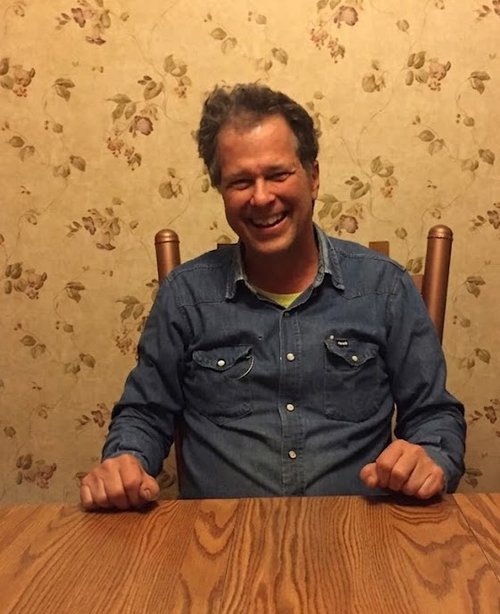
One day during my oncology residency, I ran into one of the nurses who had cared for my dad. She asked how he was doing, and I showed her a recent picture of him. What I loved most about this picture was its naturality. His hair had grown back, he was smiling, and upon first glance he looked so normal that it was hard to believe he had ever been sick.
My dad’s diagnosis taught me the perpetuity of hope. The fact that he had made it through transplant and was now back to normal was all we could have hoped for and more. Yet, knowing relapses occur and being weary of remaining too hopeful, my hope flickered anew as new therapies were approved in the MCL landscape in the years following his transplant. While it’s important not to propagate false hope, these future advances can be sources of optimism. I am often humbled when current patients express selfless hope that these advances may benefit future patients.
These moments and lessons from my dad’s diagnosis, treatment, transplant, and recovery served me well as I began my career. However, in 2020, another “Where were you” moment struck again. I was about to go hiking in Southeast Colorado when my mom texted me saying she had been diagnosed with breast cancer. Watching my mom serve as my dad’s faithful caretaker during his diagnosis and treatment, only to be diagnosed with cancer herself a few years later, was absolutely devastating.
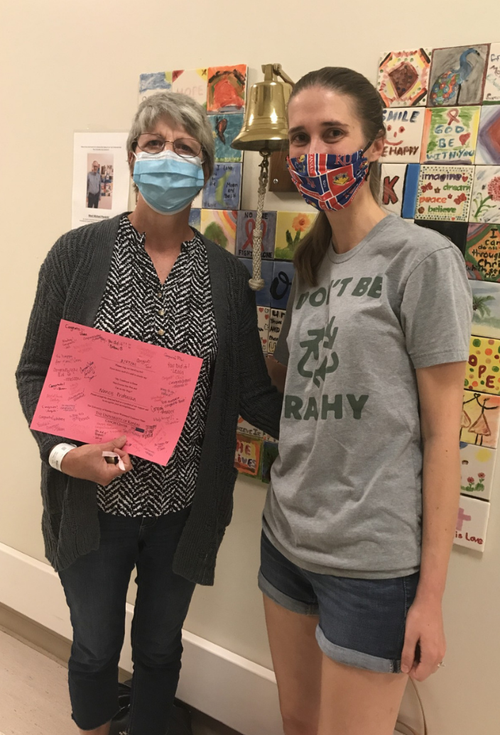
Thankfully, the course of my mom’s diagnosis did not turn out to be as complicated as my dad’s, and it presented a chance to apply what I had previously learned. In the weeks after her diagnosis, I was able to focus on being present and emotionally available for my mom. Ironically, I was starting a job at the exact place where my mom received her treatment. Infusion nurses would ask me how my mom was doing, though I’d never imagined making small talk like this the first few weeks on the job. My colleagues were supportive and understanding when I left the verification of my mom’s orders to them. Academic curiosity helped me ask questions and lean on reliable resources when my mom had symptoms or when she asked me about duration of therapies. I was there when she got to ring the bell, both of us teary-eyed and full of hope for what came next.
I am so fortunate that both of my parents are still with me today, and I fully recognize how some reading this may have had family members or loved ones experience opposite outcomes. My parents’ cancer diagnoses were far from gifts. However, I realized that these experiences could be a gift through which I could help others, both as a pharmacist and as a daughter of parents who’ve had cancer. When I share glimpses of when my parents were going through treatment, I often see patients’ demeanors soften. There is an unmistakable look that’s a mixture of understanding and pain. It’s an unspoken recognition of an unlikely and shared circumstance.
In a roundabout way, my parents, who have always been my sense of home, led me to a sense of feeling at home in oncology. I was able to be there for them while they went through treatment, and I often see reflections of them in the wonderful patients I care for today.
So, when posed with the question – “What would you do if this were your family member?" – the question always hits a little closer to home.